I lead design in complex, regulated environments. Connecting executive strategy to team execution. Building the organizational infrastructure that makes great work possible at scale.
I grew up in El Salvador and moved to Buenos Aires to study graphic design. No scholarship, no safety net. Just a clear goal and the discipline to work toward it. That experience shaped everything about how I lead: build from what you have, stay grounded in context, and move forward with intention.
For the past 12 years I have led design teams in environments where the stakes are high, the constraints are real, and the work has to be excellent. I care as much about building the conditions for great work as I do about the work itself. The team rituals, the quality standards, the stakeholder relationships, the processes that hold under pressure.
I am bilingual in English and Spanish. I bring a Latin American perspective that quietly shapes how I think about craft, community, and resilience inside organizations.
"I build resilient design practices — organizationally and strategically — inside complex environments."
Core positioningThree stories from the work. Each one about a different dimension of what design leadership actually requires.
The bank's consumer banking platform relied on a third-party solution facing deprecation. The vendor offered an updated product, but it carried the same limitations that had constrained us for years: limited customization, iFrame-driven experiences, additional costs for functional changes, and dependency on the vendor's roadmap.
A small cross-functional team from product, technology, and UX was assembled to evaluate options. I represented the design perspective and recognized quickly that no off-the-shelf solution could serve our client base's specific needs.
The organization was skeptical we could build end-to-end within the timeline. I led conversations with product and engineering to consolidate perspectives, then helped build the recommendation to build instead of buy. The case was grounded in long-term cost analysis, user impact, and the strategic value of owning our own experience.
I assembled a focused design team and coached them through an 18-month redesign covering every feature and service in the platform. We addressed known user pain points the previous solution couldn't accommodate, established scalable patterns for future iteration, and used the project to cement design QA as a formal quality control step before every release.
Development wrapped at the 24-month mark. The vendor later extended support for peer institutions who couldn't move as quickly. We had already finished.
At Applaudo Studios, I joined as the second designer on staff. By 2020 I was leading 21 designers and 10 trainees across multiple countries. At City National Bank, I joined a six-person team relying heavily on external vendors and built the internal infrastructure to bring that work in-house. At peak, 12 people reported directly to me.
Then came the reductions. In 2024, the bank reorganized and my team lost two designers overnight, with no advance warning. A year later, a second restructure eliminated my manager's position and transferred some of her responsibilities to me.
Both times I moved quickly. For the first reorg: immediate reallocation to preserve delivery continuity, then structural redesign to prevent the same vulnerability. For the second: a 30-day plan documented and communicated within days. I held sessions where I walked the team through exactly what I knew and how I would support them.
When my new manager was announced, I moved quickly to bring her up to speed. Managing up and managing down at the same time.
When Applaudo expanded from localized to fully distributed in 2017, the challenge wasn't logistics. It was cohesion. Designers who had worked side by side were now spread across countries and time zones. I needed a mechanism to keep them connected as a team, not just as a collection of individuals.
Design huddles were that mechanism. A regularly cadenced meeting built around three goals: sharing context across work streams, developing skills, and building culture. I brought them to City National Bank when I joined. One of the first things I implemented with a fully remote team during the early pandemic period.
At Applaudo, the team filled a shared card in Figma each week: what they were working on, a challenge they solved, and their "emotional pet" — a personal side project they fed regularly, like a tamagotchi. The ritual created just enough structure to make sharing feel safe.
The second half rotated between three formats: Fresh Eyes (rapid-fire critique where the team offers multiple framings on one designer's problem), Design Talks (one designer presents a practice-relevant topic, then leads discussion on what to adopt), and AMA (a guest from product, engineering, or sales shares their work to broaden the team's perspective).
At City National, the focus shifted toward sharpening presentation and facilitation skills. Designers lead discussions on topics like AI, requirements discovery, and content design standards.
Baby turned 1. First ice cream.
She approved.
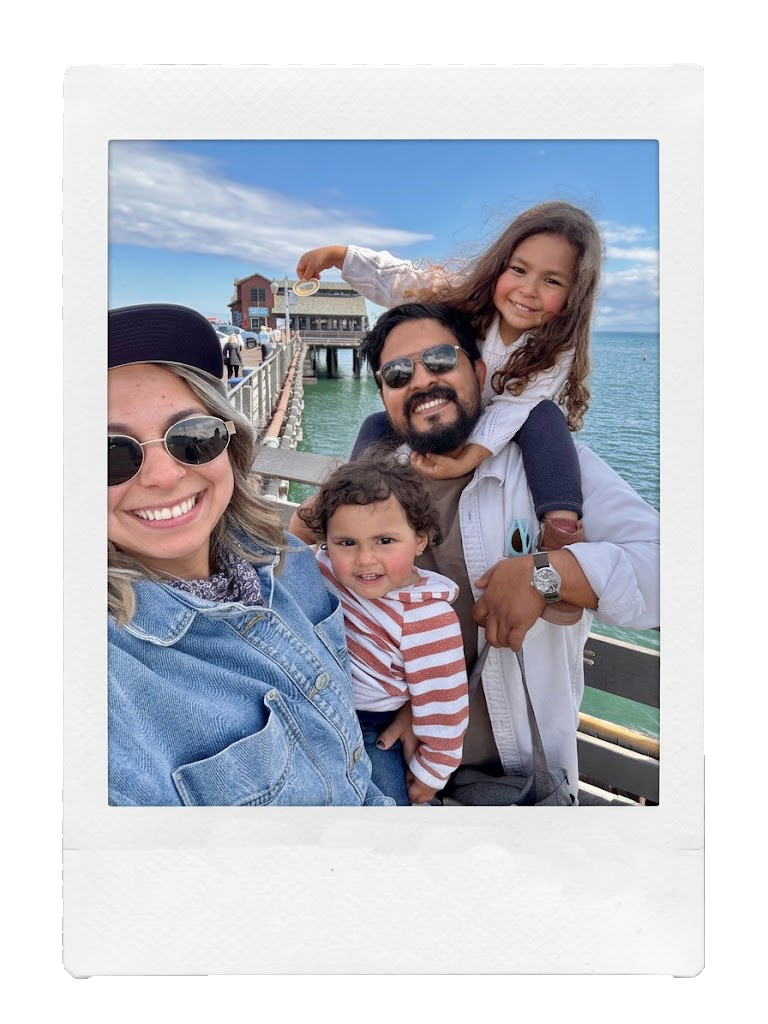
Two daughters, one patient wife, one plot of land near the beach in El Salvador that may someday become a house. I think in systems whether I want to or not. Most of my best ideas come from watching my kids figure something out for the first time.
A thought
Babies are the perfect MVPs.
They require enormous support and do only the basics — but deliver just enough to form an emotional connection that grows as they ship new capabilities. Every product team should study the first year of life.
Reading
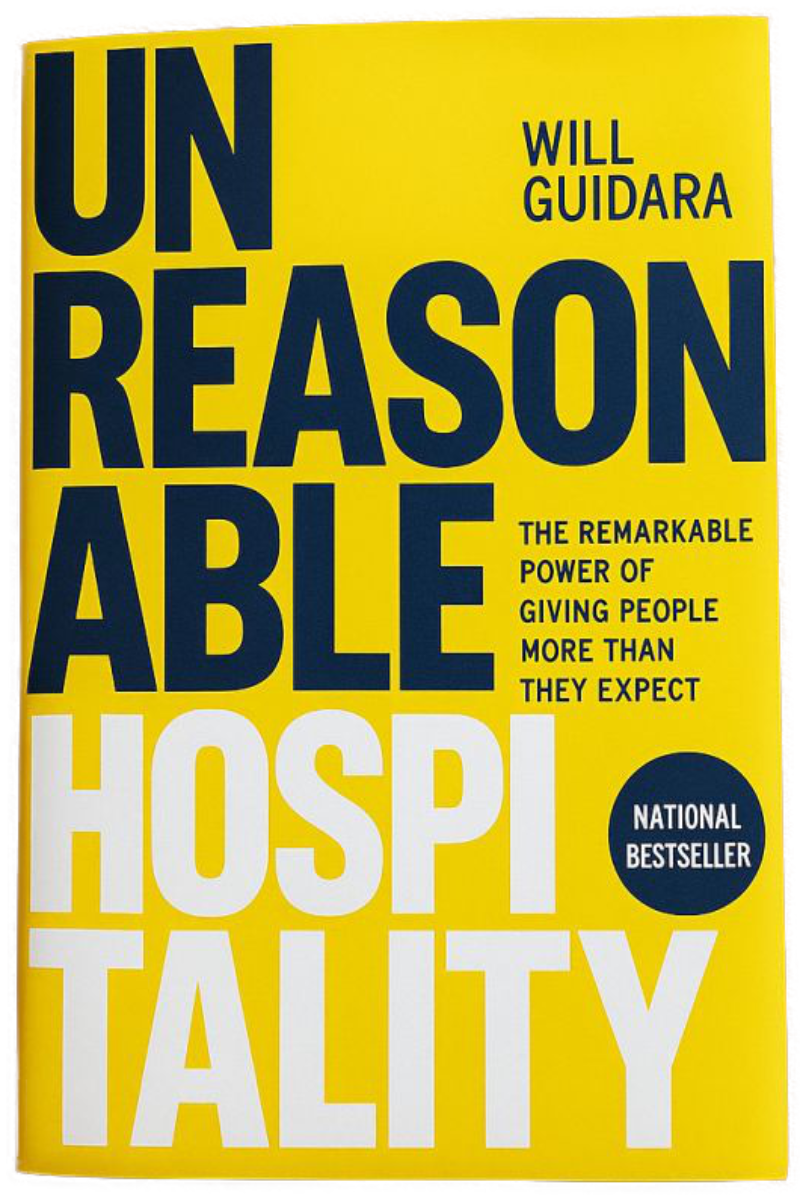
Unreasonable
Hospitality
Ostensibly about restaurants. Actually about servant leadership, extraordinary attention, and making people feel seen. Any industry could learn from it.
Still thinking about this place. Culebra, PR.
Side project
Pan Pan
Palermo
Helping my wife launch her home bakery. Turns out starting a baked goods business requires most of the same skills as launching a product — and better sourdough.
I'm selectively exploring Head of Design, VP of UX, and Director of Product Design roles at mid-size companies scaling up. If you're building something that could use this kind of leadership, I'd like to hear about it.
I'm looking for environments where design leadership is valued at the executive level, the work is complex enough to be interesting, and there's room to build something that lasts. Mid-size companies navigating scale are where I do my best work.